This post echoes the ideas of discussants during the GETSPA webinar titled, “Advancing transformative social policy in Africa – towards an agenda for the second world summit for social development”. – By Audrey Gyamfi
As we prepare for the Second World Summit for Social Development, one of the important questions we need to ask is whether there is a place for “transformative social policy”. Professors Jimi Adesina and Katja Hujo offered powerful insights on this subject during the GETSPA webinar. Listening to them, I couldn’t help but think: the gap between aspiration and reality is exactly where Africa’s future will be won or lost.
On paper, the newly released Zero Draft Political Declaration for the summit is ambitious. It pledges to eradicate poverty in all its forms, achieve full employment and decent work and build inclusive societies where “no one is left behind”. It calls for universal health care, stronger social protection, gender equality and even new ways of measuring progress beyond GDP. These are all encouraging signals.
But Adesina and Hujo’s critiques cut to the heart of the matter: without structural change and political courage, the declaration risks becoming yet another well-written document that fails to deliver for those who need it most.
Social and Economic Policy: A False Divide
Adesina captures the sense of this dichotomy:
“You cannot pursue a social policy that is grounded in solidarity while running an economic policy grounded in individualism.”
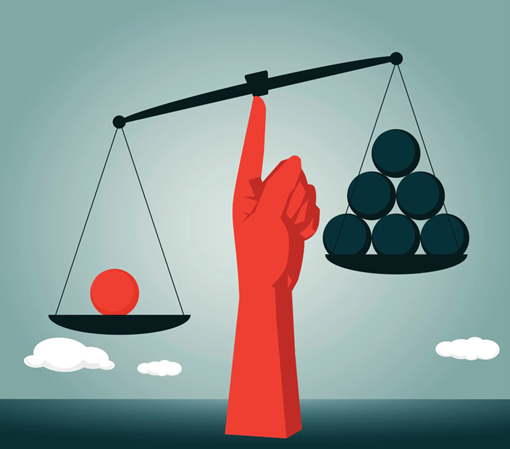
This statement highlights a deep contradiction at the core of development policy. Too often, economic growth is pursued as an end in itself while social policy is treated as the clean-up crew—mitigating poverty here, patching up inequality there.
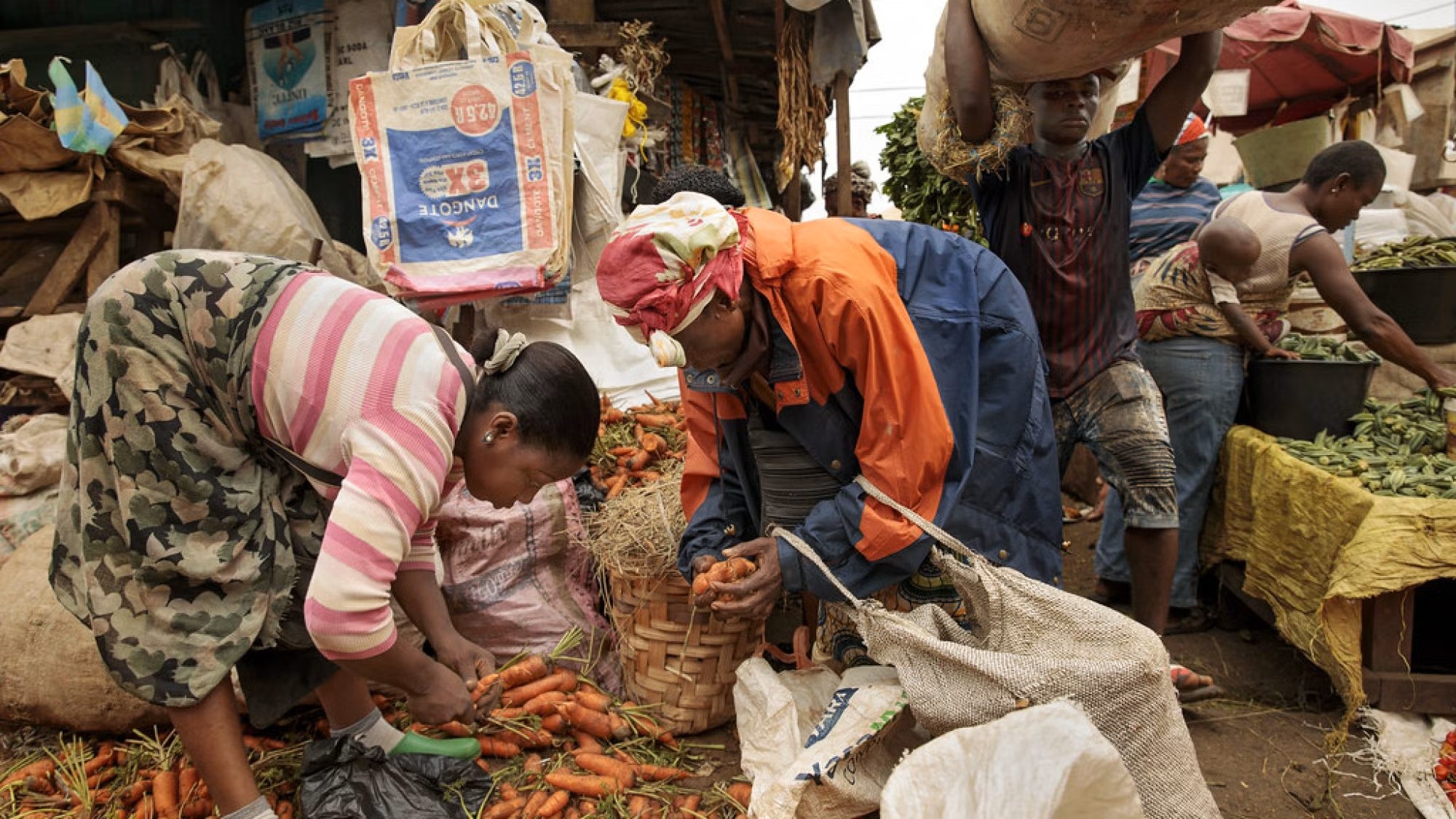
But Africa cannot afford this false divide. With nearly 60% of workers trapped in informality and youth unemployment at alarming levels, economic policy that does not begin with social goals is doomed to reproduce exclusion. The draft declaration talks about the three pillars—poverty eradication, employment and social integration—as “mutually reinforcing”. The real question is whether governments are ready to put that into practice by letting social priorities drive economic choices, not trail behind them.
Structural Issues, Not Accidental
Hujo pointed to another critical weakness in the declaration: the lack of real problem analysis. Evidently, the declaration acknowledges the “root causes” of poverty and inequality, but doesn’t name them. And this silence matters.
Because how we explain poverty, for instance, shapes how we respond to it. If poverty is seen as bad luck—someone without schooling, a family trapped in intergenerational disadvantage—then the solutions are small-scale fixes. But if poverty is understood as the product of economic models that extract wealth, depress wages and exclude millions, then the solutions must be structural.
The declaration’s proposal to adopt Multidimensional Poverty Indices and metrics beyond GDP is a step in the right direction. Africa doesn’t need better statistics alone—it needs bold policy choices that shift resources, power and opportunity.
What the Declaration Gets Right and What It Misses
To be fair, there are positive elements worth celebrating. The draft pledges to expand social protection coverage by at least 2% each year—a concrete target that could make a real difference if backed with financing. It also highlights the importance of universal approaches, investments in early childhood development and acknowledges the value of the care economy.
Yet some silences are glaring. Climate change and migration are mentioned but lightly, even though these are existential issues for Africa and the Global South. The declaration also gives public and private actors nearly equal weight, suggesting that private providers are on par with states in delivering social development. That framing is dangerous considering that the state is the duty-bearer. Treating profit-driven actors as equal with the state risks undermining accountability and widening inequality.
Will African Voices Be Heard?
When it comes to Africa’s role in this summit, the picture is mixed. Adesina noted that African states have pushed for stronger action on debt justice and illicit financial flows, reflected in the declaration’s calls for reforming the global financial system and ensuring fair solutions to sovereign debt crises. That is important progress.
But beyond these issues, Africa’s voice is too muted. Negotiations remain opaque and there is little clarity on how African priorities—like industrialisation, universal health and meaningful youth employment—are shaping the draft. This is troubling because Africa is home to the world’s youngest population and some of its most vulnerable economies. If the continent doesn’t demand a people-centered, gender-equitable development path, no one else will.
From Words to Action
The draft declaration speaks of a world where people live “in dignity, shared prosperity and peace”. It is a beautiful vision. But declarations don’t change lives—policies do. And policies only change when leaders are willing to confront uncomfortable truths: that inequality is baked into current economic models, that universality cannot be replaced with tokenistic targeting and that solidarity must be more than a slogan.
For me, the biggest takeaway from Adesina and Hujo’s exchange is this: social policy is not an add-on. It is not a side project to soften the rough edges of growth. It is the foundation of inclusive, sustainable development.
Africa, more than any other region, has a stake in making that case boldly. With the 2030 deadline looming and many SDGs off track, this is the moment for the continent to move from being a recipient of global declarations to being a shaper of its own transformative agenda.
Because unless social policy drives economic decision-making (not the other way around), the promise of “leaving no one behind” will remain exactly that: a promise, not a reality.
References
- United Nations. (2025, April 24). Zero Draft Political Declaration of the Second World Summit for Social Development. Retrieved from [Zero-Draft-clean-as-of-24-April-2025-12pm.pdf]
- Adesina, J. (2025). Remarks during GETSPA Webinar Advancing Transformative Social Policy in Africa — Towards an Agenda for the Second World Summit for Social Development, 31 July 2025.
- Hujo, K. (2025). Remarks during GETSPA Webinar Advancing Transformative Social Policy in Africa — Towards an Agenda for the Second World Summit for Social Development, 31 July 2025.